
Imagine stepping onto the field or into the gym, ready to give it your all, only to pull a muscle or strain a joint minutes into your workout. Frustrating, right?
Injury not only halts your progress but can keep you sidelined for weeks. The secret weapon to avoid this scenario? A proper warm-up. Warming up might seem like just another step in your routine, but it plays a crucial role in protecting your body.
By preparing your muscles and joints for the intensity ahead, you’re not only enhancing performance but also significantly reducing the risk of injury. Curious about how a simple warm-up can make such a big difference? Let’s dive into the science and strategies behind this essential practice. Your future self will thank you!
Benefits Of Warm-up Exercises
Warm-up exercises boost blood flow and prepare muscles for activity. They increase flexibility, reducing the risk of strains. Engaging in warm-ups enhances coordination and balance, helping to prevent falls and injury.
Warm-up exercises are an essential part of any workout routine, acting as a protective shield against injuries. These exercises are not just about getting your body moving; they prepare you physically and mentally for more intense activity. Let’s dive into the specific benefits that warm-ups provide, making them a crucial component of injury prevention.
Enhancing Flexibility
Flexibility is key to preventing injuries, and warm-ups play a pivotal role in enhancing it. By gently stretching and moving your muscles, you increase their range of motion. This makes your movements more fluid and less likely to cause strains or sprains. Have you ever noticed how stiff you feel when you skip a warm-up? That stiffness can lead to sudden, sharp pains during workouts. Regular warm-ups ensure your joints and muscles are ready for action, reducing the risk of injury significantly.
Improving Blood Circulation
A good warm-up gets your blood pumping, which is essential for delivering oxygen to your muscles. Improved circulation helps your body perform more efficiently and recover faster. Think about how your hands warm up when you rub them together on a cold day. Similarly, a warm-up increases your heart rate, sending more blood flow to your muscles and making them more resilient to stress. Skipping this step can leave your muscles under-prepared, increasing the chance of cramps and fatigue. Prioritizing warm-ups means you’re giving your body the support it needs to excel.
Increasing Muscle Temperature
Raising your muscle temperature through warm-ups enhances muscle elasticity. This makes your muscles more pliable and less prone to tears. Imagine your muscles as rubber bands; cold rubber bands snap more easily when stretched. A proper warm-up ensures your muscles are like warm rubber bands, ready to stretch without breaking. A simple dynamic stretch or light jog can elevate your muscle temperature, making them more adaptable to the demands of your workout. So, the next time you gear up for exercise, remember how these small steps can save you from bigger setbacks.

Credit: themusclephd.com
Types Of Effective Warm-ups
Dynamic stretches enhance flexibility, boosting muscle readiness and reducing strain risk. Light aerobic activities like jogging elevate heart rate and circulation, preparing the body for physical exertion.
Warm-ups play a crucial role in injury prevention, but not all warm-ups are created equal. Different types can target various aspects of physical readiness, ensuring that your body is prepared to handle the demands of your activity. Whether you’re gearing up for a run, a game, or a workout, knowing the types of effective warm-ups can make all the difference. Let’s dive into the essentials.
Dynamic Stretching
Dynamic stretching involves active movements that take your muscles and joints through their full range of motion. Unlike static stretching, where you hold a position, dynamic stretches keep you moving. Think leg swings, arm circles, or walking lunges. These stretches increase blood flow and improve flexibility, helping your body transition smoothly into more intense activities. Try adding dynamic stretches to your routine for a more energetic start.
Aerobic Activities
Aerobic activities like jogging, cycling, or jumping jacks are perfect for getting your heart pumping and muscles warm. These exercises elevate your heart rate gradually, boosting circulation and oxygen supply to your muscles. You might have noticed that a light jog before a sprint feels just right. That’s because it prepares your body for faster movements, reducing the risk of strains. Consider incorporating a few minutes of aerobic activity into your warm-up for optimal results.
Sport-specific Drills
Sport-specific drills tailor your warm-up to the demands of your chosen activity. These exercises mimic movements you’ll perform during the game or workout, honing your skills while prepping your body. If you’re a soccer player, dribbling drills can sharpen your coordination. A tennis enthusiast might benefit from shadow swings. By engaging in sport-specific drills, you focus on the muscles and movements you’ll need, minimizing injury risks and enhancing performance. Are you utilizing the right warm-ups for your activities? Exploring these types can transform your preparation, making it more efficient and effective.
Physiological Changes During Warm-up
Warm-up exercises increase blood flow to muscles, enhancing flexibility and reducing injury risk. Muscles become more elastic, preparing for physical activity. This physiological readiness helps protect against strains and sprains.
Physiological Changes During Warm-Up A proper warm-up is key to preventing injuries. It prepares your body for physical activity. Warm-ups bring physiological changes that help protect muscles and joints. They improve performance and reduce the risk of strains or sprains. Warm-ups are essential for athletes and fitness enthusiasts alike.
Muscle Activation
Warm-ups increase blood flow to your muscles. This makes them more flexible and ready for action. It also raises muscle temperature, which improves elasticity. Better elasticity means fewer injuries. Active muscles can handle stress better. They work efficiently and safely.
Joint Lubrication
Moving joints during a warm-up distributes synovial fluid. This fluid acts like a lubricant. It reduces friction between joint surfaces. Lubricated joints move smoothly. This prevents wear and tear during exercise. Healthy joints mean fewer injuries.
Neuromuscular Coordination
Warm-ups enhance communication between nerves and muscles. They help muscles respond quickly to brain signals. Improved coordination leads to better control. You can perform exercises with precision. Proper coordination reduces the risk of missteps. It ensures safe and effective movement.
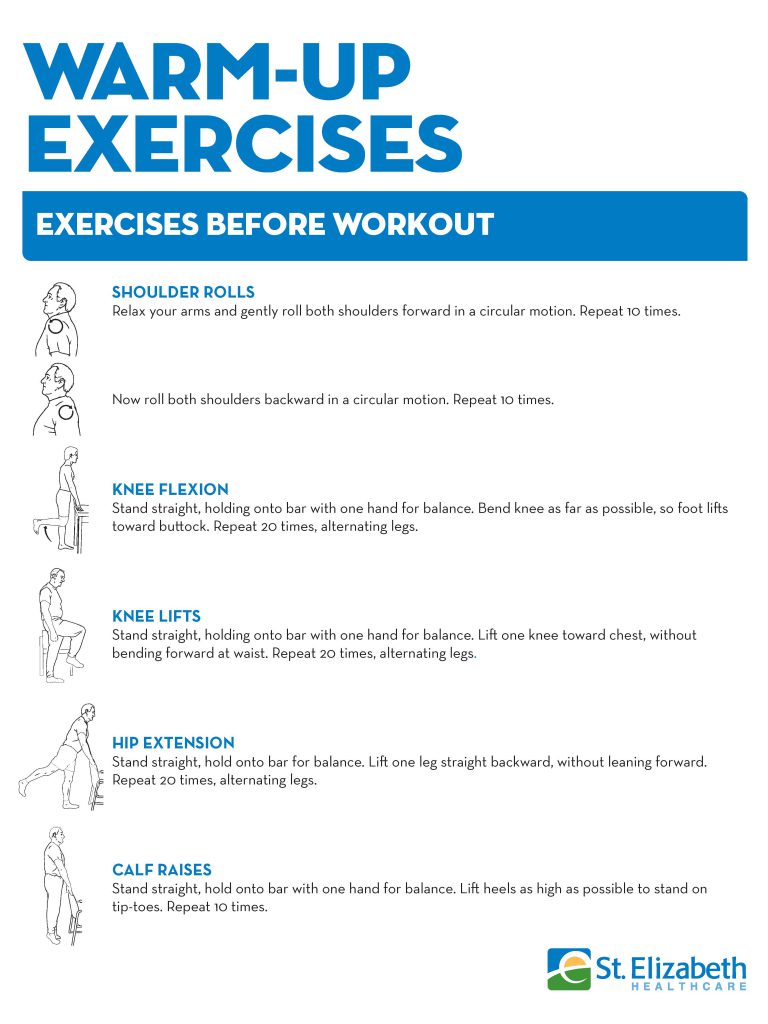
Credit: www.stelizabeth.com
Warm-up And Injury Prevention
Warming up is essential before any physical activity. It prepares the body and mind. A proper warm-up reduces the risk of injuries. It ensures muscles are ready for action.
Reducing Muscle Stiffness
Muscle stiffness can lead to injuries. A warm-up increases blood flow to muscles. This makes them more flexible. Flexible muscles are less likely to tear. Stretching during warm-up loosens tight muscles. This enhances movement and reduces stiffness.
Minimizing Risk Of Strains
Strains occur when muscles are overused. Warm-ups prepare muscles for exercise. They gradually increase muscle temperature. Warm muscles stretch better and are less prone to strains. Regular warm-ups can decrease the risk of muscle injuries.
Preparing For Intense Activity
Intense activities demand more from the body. A good warm-up adjusts the heart and lungs. It increases heart rate and breathing. This prepares the body for high-intensity tasks. Warm-ups also boost mental readiness. They help focus the mind on the task ahead.
Common Mistakes In Warm-up Routines
Warming up is a crucial part of any workout routine. Yet, many people make common mistakes that can lead to injuries or reduce the effectiveness of the warm-up. Addressing these errors is essential to ensure a safe and productive exercise session.
Overstretching
It’s easy to assume that more stretching equals better flexibility. However, overstretching can actually weaken muscles and tendons, making them more prone to injury. Imagine pulling a rubber band too far; it loses its elasticity. Aim to stretch within your comfort zone. If you feel pain, ease back.
Skipping Warm-up
In the rush to get started, some people skip the warm-up entirely. This is like jumping into a pool without testing the water temperature first. Your body needs time to transition from rest to activity. Even five minutes of light exercises can prepare your muscles and mind for the challenge ahead.
Inadequate Duration
A quick, half-hearted warm-up might seem tempting, especially when you’re short on time. But think about the last time you tried to cook a meal too fast; it probably didn’t turn out well. Your body requires a proper warm-up duration, usually 10-15 minutes, to boost blood circulation and increase muscle temperature.
Are you guilty of any of these common mistakes? Reflect on your routine and consider adjustments. Remember, a well-executed warm-up is not just about preventing injuries, but also about enhancing your performance. Your future self will thank you!
Tips For An Effective Warm-up
Preparing your body for exercise isn’t just about getting your heart rate up—it’s about minimizing the risk of injury and maximizing your performance. A well-rounded warm-up can be the difference between a successful workout and a sidelining injury. But how can you ensure your warm-up is effective? Let’s dive into some actionable tips.
Tailoring To Activity
Warm-ups aren’t one-size-fits-all; they should be specific to the activity you’re about to perform. If you’re gearing up for a run, focus on dynamic leg stretches and light jogging. For upper body workouts, incorporate arm circles and shoulder rotations. Think about the movements you’ll be doing and mimic them gently during your warm-up.
Gradual Intensity Increase
Start slow and gradually build up the intensity. Begin with gentle movements that get your blood flowing, like walking or easy cycling. As your muscles warm up, increase the pace and incorporate more dynamic movements. This gradual approach helps your body transition smoothly from rest to activity, reducing the shock to your muscles.
Incorporating Variety
A varied warm-up keeps things interesting and ensures you’re engaging all muscle groups. Mix static stretches with dynamic movements like jumping jacks or lunges. This combination not only prepares your muscles but also keeps your mind engaged and ready for the workout ahead. What new moves could you add to your routine today?

Credit: cioffredi.com
Frequently Asked Questions
How Does A Warm-up Help Prevent Injury?
Warm-ups increase blood flow, flexibility, and muscle temperature, reducing injury risk. They prepare your body for intense activity, enhancing performance. Dynamic stretching during warm-ups helps muscles loosen, improving joint mobility. Engaging in proper warm-up routines is essential for safe workouts.
What Are The 5 Benefits Of Warming Up?
Warming up enhances blood flow, boosting oxygen delivery to muscles. It reduces injury risk by increasing flexibility. Warm-ups improve muscle performance and prepare the body for physical activity. They enhance mental focus, promoting better concentration. Lastly, warming up increases heart rate gradually, optimizing cardiovascular performance.
Is A Proper Warm-up To Help Increase Your Risk Of Injury?
A proper warm-up reduces injury risk by preparing muscles and increasing flexibility. It enhances blood flow and improves performance.
Are Injuries Less As A Result Of Warm-up?
Warm-ups reduce the risk of injuries by preparing muscles and joints for physical activity. They enhance flexibility and circulation. Proper warm-up routines increase blood flow, improve performance, and decrease the likelihood of muscle strains. Incorporating dynamic stretches and gradual intensity can further minimize injury risks during exercise.
Conclusion
Warm-ups are crucial for injury prevention. They prepare muscles for action. Blood flow increases, enhancing flexibility and strength. Stretching keeps muscles supple and ready. Focus on gradual intensity to avoid strain. Start with light exercises. Progress to more dynamic movements.
Listen to your body’s signals. Feel the warmth, not pain. Consistent warm-ups build resilience over time. They’re a small investment for long-term benefits. Prioritize your safety with a good warm-up routine. Stay active, stay injury-free. Remember, the right start makes a huge difference in your workout.
Keep your body ready, and enjoy your exercise.
